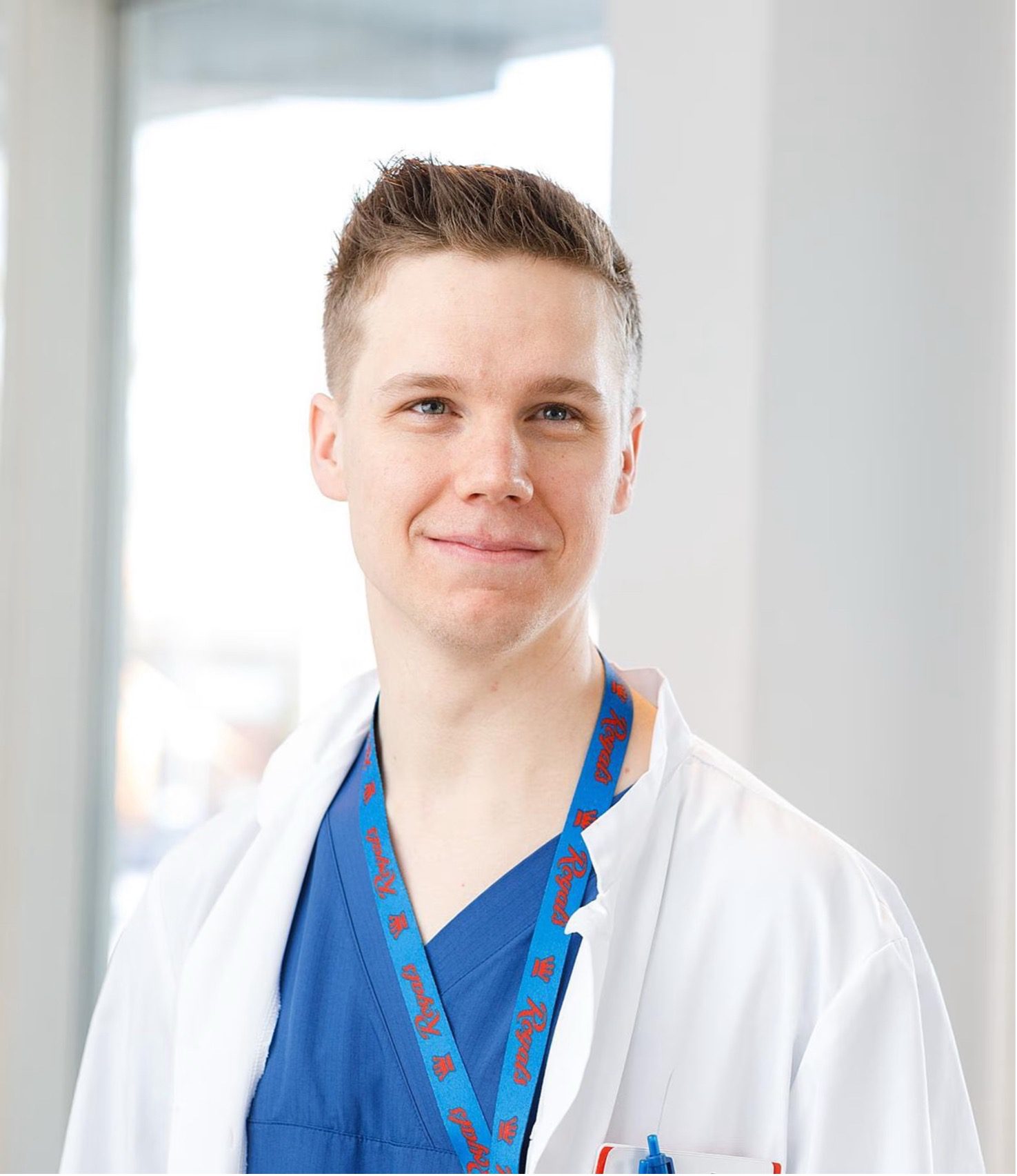
Curiosity led Jaakko Koskenniemi to begin doctoral research already during medical school.
– During my first summer working in medicine, I became familiar with a remarkable difference in reproductive health between children studied in Turku and Copenhagen. The researchers had an interesting hypothesis regarding the effects of environmental chemicals. I ended up writing my doctoral dissertation on that topic and defended my thesis in February 2018.
Research collaboration with Finnish and Danish colleagues led to a gap year from medical studies in 2014–2015.
– During my dissertation project, we made a couple of research visits to Copenhagen, and I thought it would be interesting to see how another research group operates. At the Klinik for Vaekst og Reproduktionissa Rigshospitalet, I learned how epidemiological research is actually conducted in practice.
From testicular cancer risks to childhood diabetes
– The pediatric medicine course was excellent, and I enjoyed the atmosphere at the Department of Children and Adolescents, which is where I eventually found my specialty. What convinced me was how much emphasis was placed on clinical judgment rather than relying solely on test results.
Meeting children with type 1 diabetes and their families strongly motivated his research work.
– About one percent of children develop the disease, and for many it still begins with life-threatening ketoacidosis requiring intensive care. Living with the disease demands a great deal from families, and it would be wonderful if these children could simply enjoy a normal childhood. Combining the roles of clinician and researcher feels natural. Meeting children with type 1 diabetes and their families keeps the focus of research on things that truly matter. Clinical work and research also balance each other well: in the clinic, things move faster, but the routines are more rigid and the work is less creative or controllable.
Research into subtypes of type 1 diabetes and drug development is currently advancing rapidly. New treatments aimed at preventing or at least delaying disease onset are emerging on the horizon. Teplizumab, a monoclonal anti-CD3 antibody, has recently received EU-wide approval for the prevention of type 1 diabetes in children over eight years old who have diabetes-associated autoantibodies and early signs of impaired glucose metabolism, but who have not yet developed insulin-dependent diabetes.
– Our project aims to uncover disease mechanisms of type 1 diabetes through studying genetic variation, thereby identifying targets for new therapies. The DIPP project — a collaboration between the universities and university hospitals of Turku, Tampere, and Oulu — is the world’s largest birth cohort study on the development of type 1 diabetes. It provides a unique opportunity to investigate disease mechanisms that appear before diagnosis. Finland has traditionally maintained internationally high-quality type 1 diabetes research, and in Turku we also participate in international collaborations such as the TEDDY project (The Environmental Determinants of Diabetes in the Young).
– In addition to the DIPP dataset, our research project benefits from analyses conducted within the Pediatric Diabetes Registry Study coordinated by the University of Helsinki, which investigates children diagnosed with type 1 diabetes. Our study is intended as a first step toward much more comprehensive characterization of children participating in the DIPP study, thereby enabling world-class diabetes research. Hopefully, the development of new therapeutic targets for type 1 diabetes will continue in Finland in the future as well.
Learning more in Florida
In 2023–2024, Jaakko Koskenniemi worked as a postdoctoral researcher at the Health Informatics Institute of the Morsani College of Medicine at the University of South Florida, where the TEDDY project is coordinated.
– I wanted to learn more advanced epidemiology and statistics, and to get to know key figures in the field better. There I learned modern analytics and management of larger datasets, and especially how to write better scientific articles and grant applications. I felt the level of expectations rose in exactly the right way.
– As a diabetes researcher, I became frustrated by the fundamental uncertainty of traditional epidemiology: many invisible factors can mislead even excellent studies. After becoming familiar with statistical genetics methods, I realized the possibilities they offer for inferring disease mechanisms. I thought these analyses absolutely had to be incorporated into the DIPP study, which is the world’s largest and most beautiful study following type 1 diabetes development from birth before disease onset.
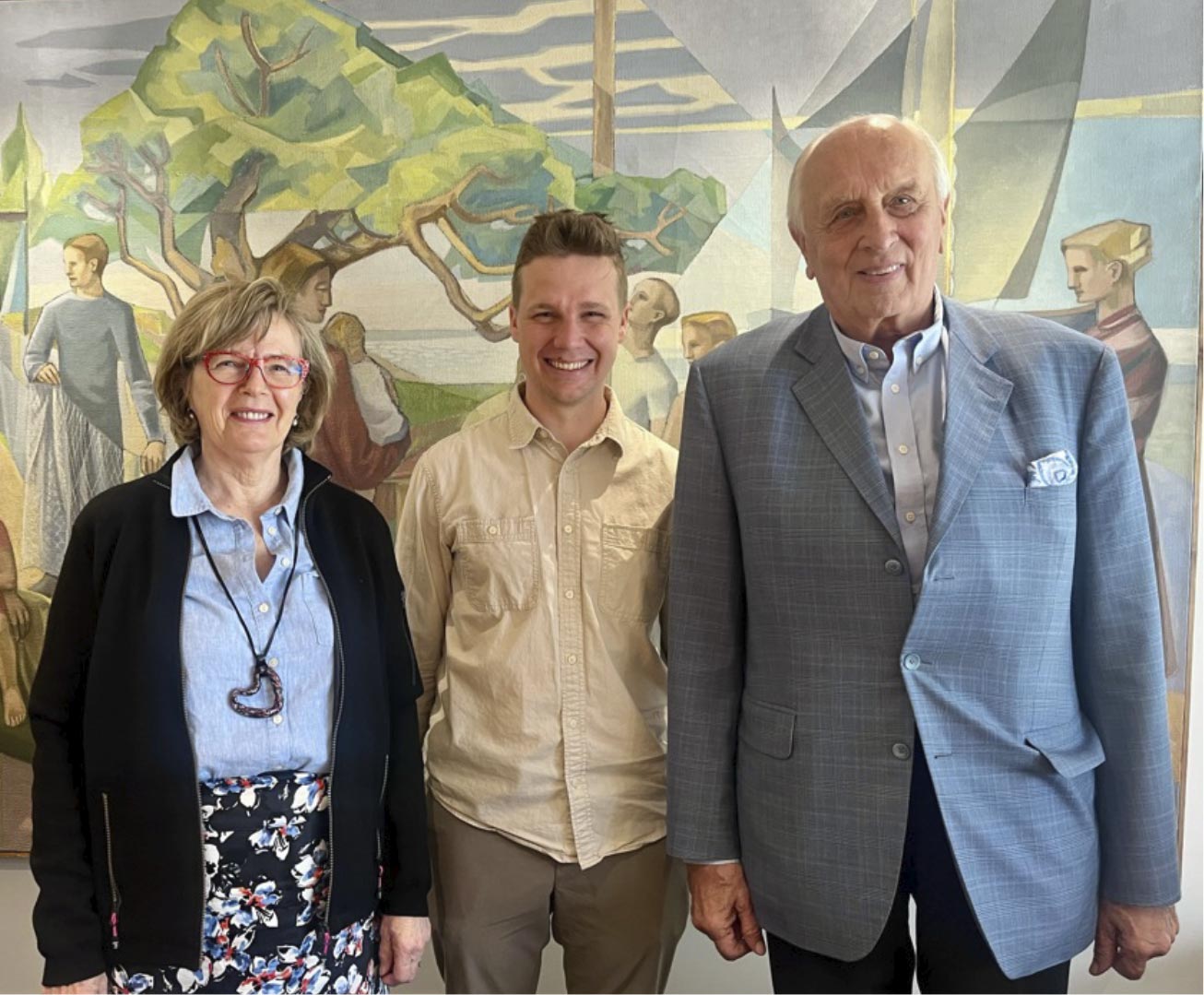
– We are genuinely trying to figure out how to prevent type 1 diabetes from developing. Our project already has preliminary funding that enabled us to start the work. Thanks to the major grant awarded by the Marita and Heikki Vaistee Fund administered by the TYKS Foundation, we can analyze the genomes of approximately 760 children with type 1 diabetes and their controls using microarray technology, and investigate disease mechanisms through genetics. This phase will also make us competitive for much larger EU grant applications and other major international funding opportunities.
Key collaborators and role models
The research project involves Professor Jorma Toppari from the Department of Children and Adolescents at TYKS, as well as experienced DIPP study nurses and doctoral researchers Saori Itoshima, Emilia Kaiser, and Katariina Talsi. Koskenniemi’s research group also maintains close collaboration with researchers at the Tampere and Oulu DIPP centers and with other scientists involved in the DIPP and TEDDY studies.
– I’ve been fortunate to work with many outstanding international top researchers. Professor Jorma Toppari has been a mentor throughout my entire career — the first person I contact both in difficult situations and in moments of success. In Denmark, the country’s most cited researcher Niels Erik Skakkebaek, along with Anders Juul and Katarina Main; in Florida, the Swedish immunology expert Åke Lernmark, Jeffrey Krischer, and Kristian Lynch; and in Finland, long-standing diabetes researchers Mikael Knip, Jorma Ilonen, and Riitta Veijola are all role models for me. I’ve tried to learn from their working processes. It is also fascinating to observe what kinds of personality traits are shared by researchers at the very top.
Balancing work and family life
– Recently, I’ve had to do research alongside clinical work, which is demanding both for myself and especially for my family. At home it is rarely quiet or boring — besides my wife, we have three children, and a fourth is arriving this autumn. Whenever possible, I enjoy sports and ball games, and hopefully in the future increasingly together with my own children.
Read more:
Marita and Heikki Vaiste establish fund within TYKS Foundation
Major Grant Awarded to Diabetes Researcher from the TYKS Foundation’s Marita and Heikki Vaiste Fund