Panu Jaakkola, Professor of Clinical Oncology and Cancer Research at the University of Turku, has been awarded the Jarmo Karppi Recognition Prize for Distinguished Cancer Research.
The Board of the TYKS Foundation is proud to present the Jarmo Karppi Recognition Prize for Distinguished Cancer Research to Professor Panu Jaakkola, who has long been dedicated to cancer research and drug development at the University of Turku and Turku University Hospital. Today’s research paves the way for tomorrow’s high-quality care. Professor Jaakkola’s work, which began in basic research, continues actively in the field of pharmaceutical research, says Minna Lukkarinen, Executive Director of the Foundation.
In 2023, the TYKS Foundation established the Jarmo Karppi Recognition Award—named after a major donor—to honor a distinguished cancer researcher for significant contributions to cancer research. This marks the second time the award has been presented; it carries a value of 15,000 euros.
From basic research to patient care
My research focuses on both the cellular and molecular biology of cancer and the treatment of patients with kidney cancer. The molecular biology of oxygen deprivation in tumors lies at the core of my work. Oxygen deficiency in tumors influences the growth of cancer cells and the efficacy of cancer treatments, as well as the cellular and molecular biological mechanisms through which these effects are mediated, explains Panu Jaakkola.
For Jaakkola’s research career, the postdoctoral period at the University of Oxford (1998–2001) proved highly productive. At the time, Sir Peter Ratcliffe’s research group was investigating the molecular mechanisms by which cells sense oxygen levels in the body and respond to oxygen deprivation—a process relevant to the development of tumors. This research led to the discovery of novel enzymatic oxygen-sensing mechanisms. The findings were published in 2001, and the group leader, Peter Ratcliffe, was awarded the Nobel Prize in Physiology or Medicine in 2019. In its citation, the Nobel Committee highlighted two publications to which Jaakkola contributed as a lead or co-author.
Between 2001 and 2019, Jaakkola led a research group at the Turku Bioscience Centre, further exploring the link between cancer and the molecular and cellular mechanisms of oxygen deprivation. He has participated in numerous initiatives to support cancer research infrastructure at Turku University Hospital and the University of Turku, and served as the director during the establishment phase of both the Auria Biobank and the Western Cancer Center. Today, Jaakkola’s research continues at the Medisiina D building—alongside cancer research laboratories—as well as at the Department of Oncology and Radiotherapy, where he also treats patients. His clinically oriented patient studies integrate the latest knowledge in molecular biology into patient care.
The clinical cancer research unit led by Panu Jaakkola currently employs 20 researchers and research nurses, supported by external funding. Jaakkola serves as a group leader within the iCAN and InFLAMES Academy Flagships, which focus on the development of medicines and diagnostics for cancer and immunology-related conditions. Jaakkola also founded the Finnish Uro-Oncology Group (FIGUG), which issues clinical treatment guidelines and regulatory recommendations, and initiates national clinical trials focused on urological cancers.
Under Jaakkola’s leadership, the Clinical Cancer Research Unit at Turku University Hospital has launched its first early-phase clinical trials, including “first-in-human” studies for new cancer drugs. In total, the unit is currently conducting dozens of different types of cancer drug trials.
One in three Finns develops cancer.
Cancer is a group of diseases that behave in different ways and have varying prognoses. Approximately 36,000 Finns develop cancer each year, and two out of three of them survive. At the same time, there are about 300,000 people in Finland living either cured of the disease or with a long-term condition. The improved treatment outcomes are the result of long-term research aimed at enhancing results for cancers with lower survival rates—such as pancreatic and lung cancers. Jaakkola has a particular interest in kidney cancer.
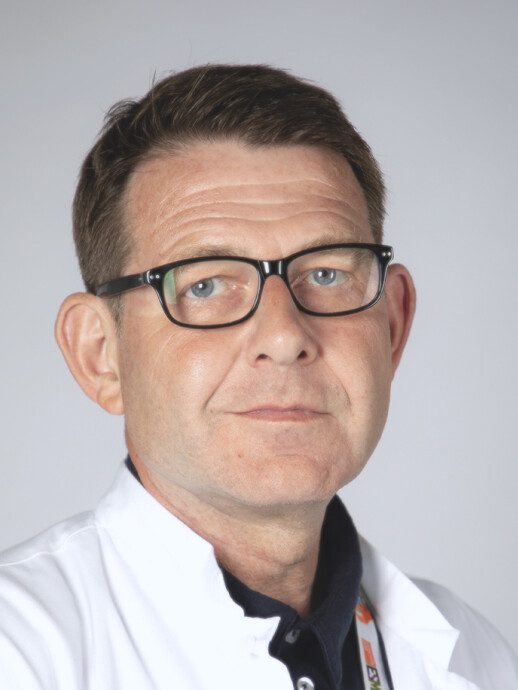
CV Panu Jaakkola
- s. 1965 Turku
- LL 1992, LT 1998 Turun yliopisto
- Postdoc-jakso Oxfordin yliopistossa Sir Peter Ratcliffen tutkimusryhmässä 1998 – 2001
- Lääketieteellisen solu- ja molekyylibiologian dosentti 2002, TY
- Syöpätautien ja sädehoidon erikoislääkäri 2013, TY
- Yli 60 tieteellistä julkaisua, joita on siteerattu noin 15 000 kertaa
- Auria Biopankin käynnistämisvaiheen johtaja, TY
- Läntisen syöpäkeskuksen perustamisvaiheen johtaja 2015-17 ja tieteellinen johtaja 2020 alkaen
- Helsingin yliopiston onkologian professori ja HUS syöpäkeskuksen tutkimusjohtaja 2018 – 2020
- Turun yliopiston ja Tyksin Kliinisen lääketutkimusyksikön johtaja vuodesta 2020
- Ohjannut useita väitöskirjoja ja toiminut vastaväittäjänä, esitarkastajana ja arvioitsijana useissa väitöskirja- ja tutkimushankkeissa
Inquiries and further information
TYKS-säätiön toiminnanjohtaja Minna Lukkarinen
040 7017876
minna.lukkarinen@utu.fi
TYKS-säätiön hallituksen puheenjohtaja Mikko Pietilä
050 5150615
mikko.pietila@varha.fi
Professori Panu Jaakkola
044 5483806
panjaa@utu.fi