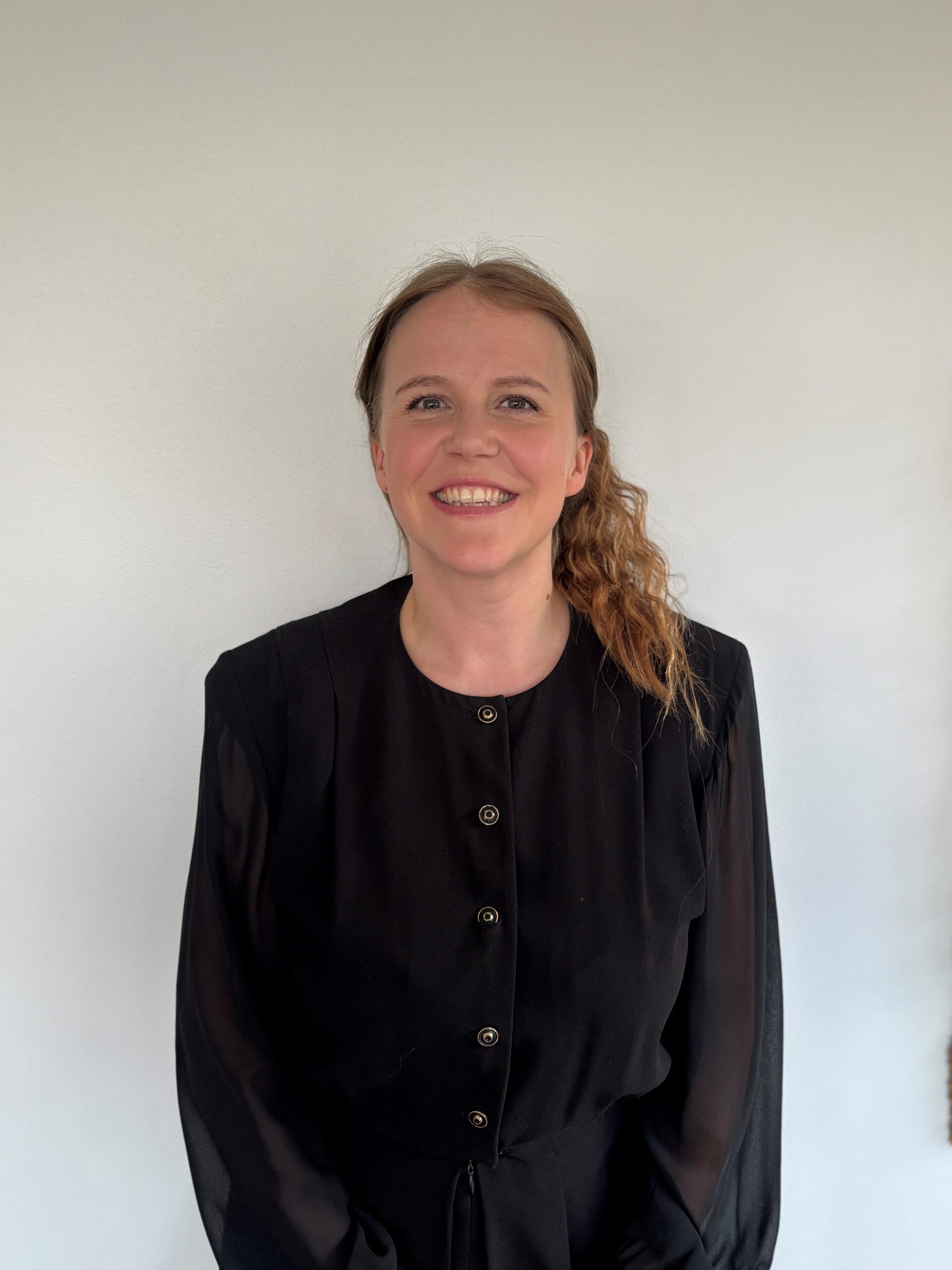
Pancreatic cancer is difficult to diagnose because it usually progresses without symptoms until it is already advanced. In her doctoral research, Sini Keskinen studies hereditary pancreatic cancer risk to help identify people at increased risk, monitor them and detect cancer as early as possible.
Pancreatic cancer has a poor prognosis and is one of the most common causes of cancer-related death in Finland. It is usually diagnosed only after the disease has already spread. Detecting pancreatic cancer at an early stage is crucial, as this can make surgery and other treatments possible while the disease is still treatable. An estimated 10–15% of pancreatic cancers are linked to hereditary susceptibility. Identifying people at increased risk makes it possible to offer them appropriate surveillance.
I became interested in this research topic while I was training as a specialist in medical genetics. At the clinical genetics clinic, I met people from families with hereditary pancreatic cancer. Some of my close friends also belong to one of these families, which gave me a personal connection to the topic in addition to my professional interest. I was deeply affected by the grief of people who had lost loved ones to pancreatic cancer and by their fear of developing the disease themselves or seeing a relative develop it. It was difficult to tell them that we did not know what caused the hereditary susceptibility seen in their families. The poor prognosis of pancreatic cancer also made me wonder whether we really could not do anything to prevent these currently healthy people from eventually dying of pancreatic cancer. At the time, Finland did not yet have a national consensus on who should be monitored or how surveillance should be carried out. There was also no ongoing research into the causes of hereditary pancreatic cancer susceptibility.
Hereditary pancreatic cancer risk can be associated with known cancer predisposition syndromes or hereditary pancreatitis. In these cases, people who carry a disease-causing genetic variant can be offered regular surveillance. However, hereditary pancreatic cancer can also run in families without a known genetic cause.
Even if close relatives of people with pancreatic cancer are offered surveillance, we cannot know for certain who in the family is actually at increased risk when the underlying cause is unknown. In the future, it will be important to identify the genetic causes of hereditary pancreatic cancer in families. This would allow us to assess each relative’s risk more accurately and offer surveillance to the people who really need it. Making sure that surveillance is targeted at the right people, at the right time, could also have a major impact on cost-effectiveness,” Keskinen explains.
For pancreatic cancer to be successfully treated, it needs to be detected and surgically removed at a very early stage. This is why it is important to find out whether surveillance of people at high risk actually works: can pancreatic cancer be detected earlier, and can surveillance improve a person’s chances of survival? Surveillance that does not provide a clear benefit can cause unnecessary anxiety and is also costly for society.
Clinical work and research
Sini Keskinen graduated as a Licentiate of Medicine in 2016 and became a specialist in medical genetics in 2025. She works as a clinical geneticist at the Genomics Laboratory at Turku University Hospital (Tyks). Half of her working time is spent at SASKI, the Centre for Screening for Inborn Errors of Metabolism, and the other half at the Laboratory of Medical Genetics. At SASKI, her work includes interpreting screening results and reporting them to paediatricians. At the Laboratory of Medical Genetics, she prepares reports on genetic tests together with hospital geneticists and plans and compiles gene panel tests. Developing services and contributing her expertise to various local and national working groups are also an important part of her work.
I am actively involved, for example, in the clinical steering group of FICAN West, the Western Finland Cancer Centre, as well as in Subproject 7 of the Individualised Medicine Programme supported by the Ministry of Social Affairs and Health, the Rare Cancers and Cancer Predisposition Syndromes project, and the working group for cancer among clinical geneticists. I have also been involved in planning and establishing a new National Molecular Profiling Group. Its aim is to bring together a broad network of experts in cancer treatment and diagnostics and to develop shared national recommendations and practices for molecular profiling and molecular diagnostics. The goal is to ensure that patients receive equal treatment across Finland.
Keskinen began her research career in 2020, when she worked with Hannele Koillinen, a specialist in paediatric neurology and clinical genetics at Tyks, and Professor Minna Pöyhönen to establish a research group investigating the causes of hereditary pancreatic cancer susceptibility. In 2022, Keskinen began her doctoral studies at the University of Turku. Koillinen and Pöyhönen are now her doctoral supervisors.
The first part of my research is a prospective study investigating the genetic causes of hereditary pancreatic cancer susceptibility in families. We are using exome sequencing to look for genetic factors that may explain why pancreatic cancer occurs in these families. In the second part, I am retrospectively studying patients with pancreatic cancer who have been treated in the Wellbeing Services County of Southwest Finland and who have been identified as having hereditary pancreatic cancer susceptibility. The third part is a systematic review and meta-analysis looking at how effective surveillance for hereditary pancreatic cancer susceptibility is. In the fourth part, I am studying hereditary pancreatic cancer susceptibility in one particular family using whole-genome long-read sequencing.
National and Nordic collaboration
Through her doctoral research, Keskinen has become a recognised expert in hereditary pancreatic cancer susceptibility in Finland.
In 2022, I was asked to lead the national working group on hereditary pancreatic cancer susceptibility. We have worked actively to raise awareness of the topic. Our most important achievement so far has been the first national surveillance recommendation for hereditary pancreatic cancer susceptibility, published in the Finnish Medical Journal in 2024. The recommendation means that patients in the target group can receive regular imaging-based surveillance, and it has helped harmonise surveillance practices across Finland. Since 2024, our working group has been known as the Finnish Familial and Hereditary Pancreatic Cancer, or FinFHPC, Consortium. As part of the consortium, I lead the national FinFHPC study. In the future, we want to investigate how effective surveillance is and what psychological effects it has. We also hope that the research will enable the development of biomarkers and artificial intelligence-assisted tools for the early detection of pancreatic cancer.
In 2025, the national research and development work expanded to the Nordic level. Keskinen led the establishment of the NordFHPC Consortium, bringing together experts from all the Nordic countries. The aim is to harmonise surveillance for hereditary pancreatic cancer susceptibility by developing shared Nordic recommendations.
The third part of my doctoral research is a systematic review and meta-analysis that we carried out together with the NordFHPC Consortium steering group. The systematic review and a Nordic survey of current surveillance practices will provide a basis for future joint recommendations. Another goal of the NordFHPC Consortium is to standardise how patient data and samples are collected during surveillance, so that they can be used in future collaborative research. We also want to establish a virtual biobank for joint biomarker research.
In addition to her work on hereditary pancreatic cancer susceptibility, Keskinen has published several articles on interesting and rare patient cases encountered in her clinical work, together with the healthcare professionals involved in the patients’ care.
Understanding the cause helps guide surveillance
Identifying the underlying cause of hereditary pancreatic cancer susceptibility has practical implications for genetic testing of relatives and for assessing an individual’s risk. It can also help determine when surveillance should begin and which surveillance method should be used. Knowing the genetic cause can also spare people unnecessary surveillance if they have not inherited the genetic variant associated with the condition.
When we do not know the underlying cause, we have to monitor all close relatives who are considered to be at high risk, just to be on the safe side. By studying how effective surveillance actually is, we can learn which groups should be monitored and which do not need surveillance, when surveillance should begin, and how effective the surveillance method is.
Keskinen works with different research groups depending on the project.
My doctoral supervisors play an important role, and I can always reach them quickly. We discuss all kinds of everyday research matters, too, and they have supported me throughout this journey. The research groups also include experts from many different fields, and it has been both great and educational to work with them. I would especially highlight the important role of a biostatistician in a research group. That is something I have perhaps only fully appreciated as my own research has progressed.
My career as a researcher has been very diverse. In all my research projects, I have built networks of experts around the research topic and collaborated with specialists from different fields. Working with experts locally, nationally and internationally is rewarding, and you always learn something new. Collaboration also teaches you to look at issues from different perspectives and to understand that things are rarely simply black and white. A good team has a warm sense of community and a relaxed atmosphere. People need to feel comfortable discussing things openly and sharing their own views.
A researcher’s day
In practice, Keskinen does her research in the same office where she spends her normal working days. The difference is that the nature of the work changes. A researcher’s day can be varied, with meetings and several projects progressing at the same time.
Sometimes it feels as though working during research leave is even more hectic than my normal work because there are so many things going on at once. At the same time, research offers flexibility. There is no fixed daily schedule, so I can adapt my day as needed. I try to do most of my research during research leave, but inevitably some research work spills over into my regular working hours and evenings. Grant deadlines also have to be dealt with when they come up.
Long periods of research leave make it easier to focus on research. Funding from the Tyks Foundation has been extremely important to me, and I am very grateful that the foundation has supported my research three times already. Grants make it possible for me to take leave from my regular job and focus entirely on research. Working on research alongside my regular job or in the evenings is exhausting and, in the long run, simply too demanding.
All three parts of Keskinen’s doctoral research are currently progressing simultaneously: two are at the final stage of the commenting process, while the third is in the analysis phase.
My goal is to have at least three research articles completed and published by early 2027. After that, I will start working on the introduction and summary of my doctoral thesis. The earliest possible date for my doctoral defence is autumn 2027. The FinFHPC study received a favourable opinion from the ethics committee of the Wellbeing Services County of Southwest Finland in spring 2026, and we hope to begin recruiting patients towards the end of the year. We are currently applying for a major European grant to support the work of the NordFHPC Consortium. Following the systematic review, we will probably also publish an article based on the Nordic survey. Ultimately, our goal is to publish joint Nordic surveillance recommendations.
Keskinen knows that, alongside a career as a clinical geneticist and researcher, it is important to look after your own wellbeing and remember to enjoy life.
For me, that means small moments of relaxation amid the everyday hustle and bustle, walks with the dog, exercise, gardening, and spending time with friends and my partner. But the very best way to switch off after a demanding day is my own four- and six-year-old children. When I am with them, there is no time to think about challenging comments on an article or a long to-do list. You can simply be there and play in the moment.